New-Build Homes: Construction Dust in the Ductwork
Why brand-new homes often have drywall dust and debris in the ducts, how to check yours, and what to do about it before and after move-in.
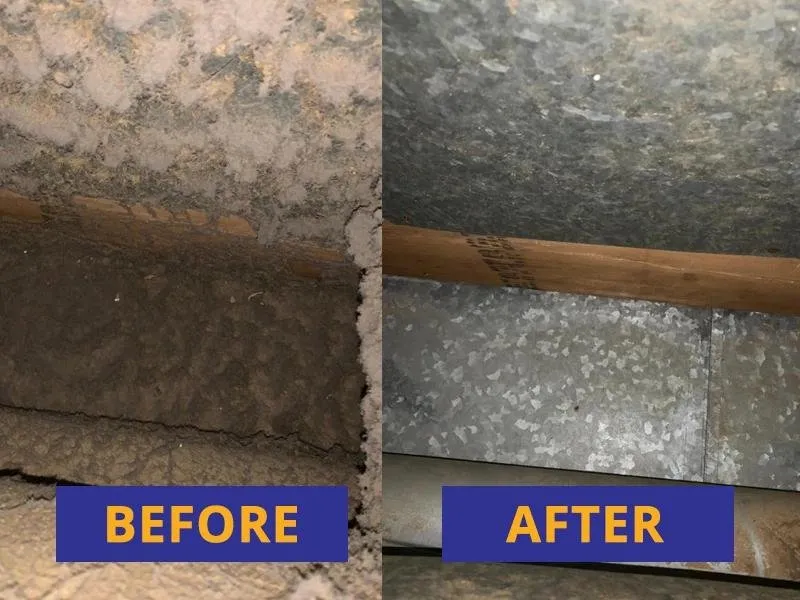
A new house should be the cleanest place you have ever lived. Fresh paint, new carpet, nothing in the closets. So it can be a surprise to pull off a register a few weeks after closing and find a layer of fine white dust, a few drywall screws and maybe a wood shaving or two.
That is common in new construction, and it has a simple explanation. Here is what happens during a build, how to tell whether your ducts were affected and what to do about it.
How construction dust gets into the ducts
On most builds, the ductwork goes in early, before the drywall. For weeks or months after that, the house is a construction site:
- Drywall gets cut, hung, taped and sanded, which produces very fine dust.
- Trim carpenters cut and sand wood.
- Flooring crews cut carpet, pad and tile.
- Insulation, paint and cleanup crews come and go.
Good builders cover the register openings, but tape and plastic tear, fall off or get removed before the job is done. In some cases, the HVAC system is turned on during construction to keep the house warm or dry the drywall, which pulls dusty air straight through the returns and into the system.
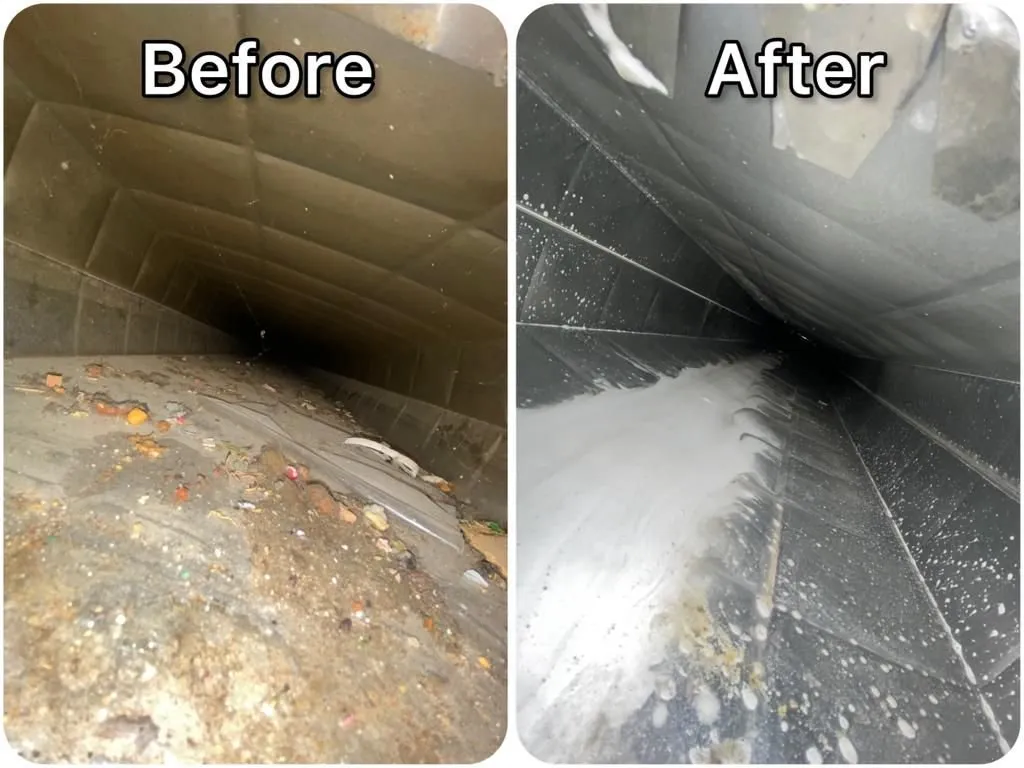
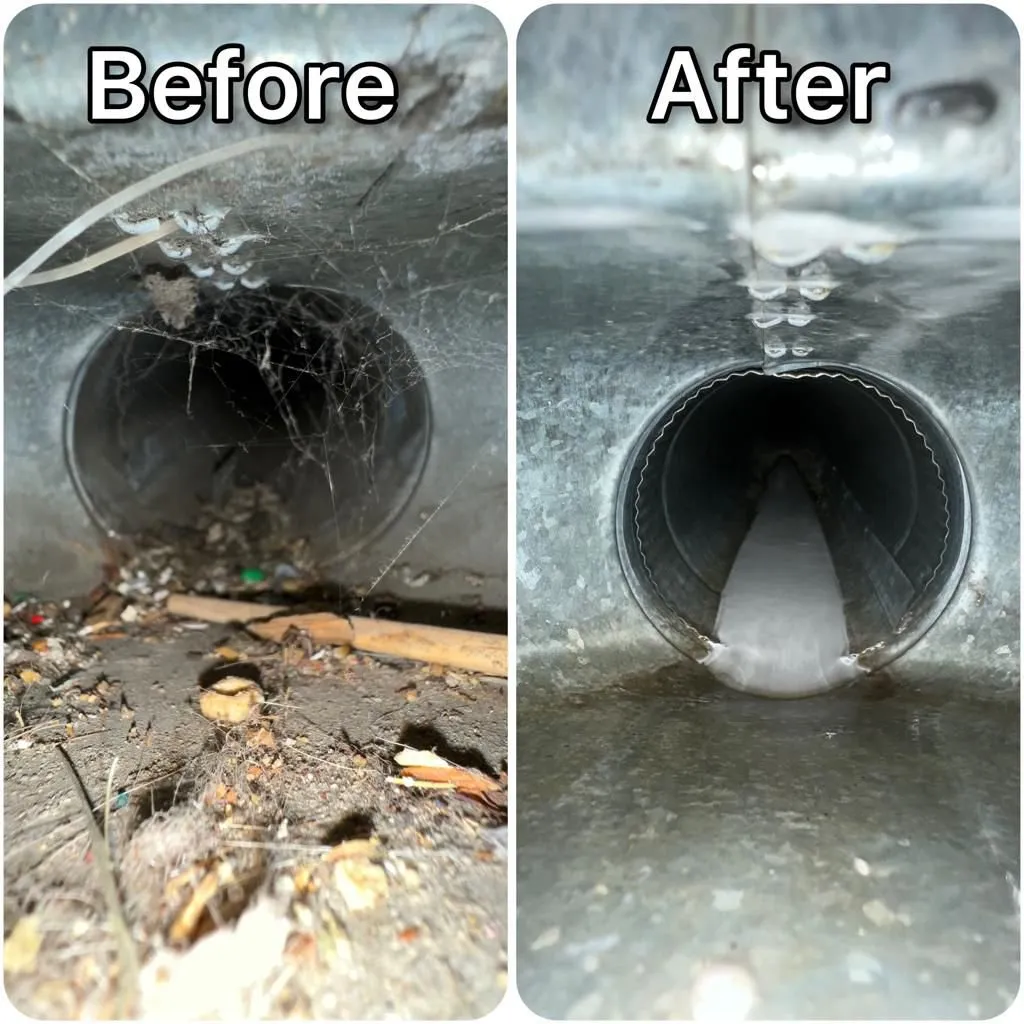
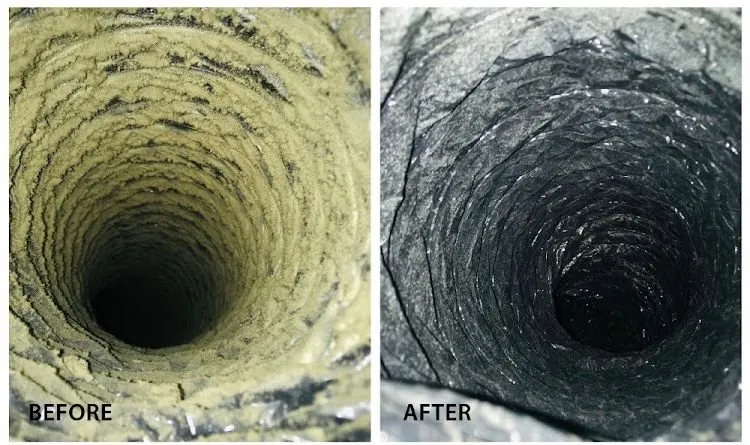
The result can be fine drywall dust along the inside of the ducts, debris sitting in the boots right under the registers and a loaded filter in the first few weeks.
Signs your new home's ducts need attention
Look for these in the first months after move-in:
- White or gray dust on furniture that comes back quickly after cleaning, especially near supply registers.
- Visible debris like screws, drywall chunks, sawdust or wire ties when you lift a register cover.
- A filter that clogs fast. Check it after the first two or three weeks. A filter that is already gray or white is catching construction dust.
- Puffs of dust when the system first kicks on.
To check, remove a few supply registers and the main return grille. Use a flashlight and a phone camera to look down the duct. A small amount of dust is normal. A coating you can write your name in, or loose debris, is not.
What to do before you close
If you are still in the building process, you have more control:
- Ask your builder whether register openings will be covered during drywall and sanding.
- Ask whether the HVAC system will run during construction, and if so, whether filters will be changed before closing.
- During your final walkthrough, pull a register or two and look inside.
- Ask that the filter be replaced with a new one at closing.
None of this guarantees clean ducts, but it gives you a clear picture and something to point to if you find a problem.
What to do after you move in
Start with the filter. Replace it in the first few weeks and check it again a month later. Some homeowners swap it more often for the first few months while construction dust works its way out.
If your check turns up heavy dust or debris, a professional duct cleaning is one of the situations the EPA lists as a reasonable time to consider it. Renovation and construction debris in the ducts is the kind of buildup that cleaning is designed to remove.
Timing matters. If your street is still under construction, with lots being graded and houses framed next door, dust will keep coming in through doors and windows. Some homeowners wait until the immediate area settles down so they are not cleaning twice. Others clean right away because the debris is already obvious. Either approach is reasonable.
What a cleaning covers
A proper duct cleaning uses source removal: brushes or other tools loosen debris on the duct walls while a powerful vacuum pulls it out of the system. The supply runs, returns and registers all get attention.
Better Air Duct Cleaning Thornton offers basic air duct cleaning for $199, covering up to 10 vents, with $29 for each additional vent. Larger two-story homes often have more than 10 registers, so it is worth counting yours before you call. If the dust seems limited to a few rooms near where finish work happened last, deep duct cleaning at $59.99 per vent lets you target those runs.
Things that are outside our scope: we do not repair or replace HVAC equipment, and we do not apply sanitizers or coatings. If you find disconnected ducts or equipment problems, your builder's warranty or an HVAC contractor is the place to start.
Don't forget the dryer vent
New construction can leave debris in the dryer vent, too, and the vent connection is often finished in a hurry when the appliance is delivered. Check that:
- The transition duct behind the dryer is metal, not plastic or foil, which the U.S. Fire Administration advises against.
- The duct is not crushed when the dryer is pushed back against the wall.
- The outdoor flap opens when the dryer runs and is not blocked by construction debris or landscaping.
Dryer vent cleaning is $99 for up to 10 feet, plus $15 per additional foot.
Construction dust in new ductwork is common and easy to check for. Replace your filter early, look inside a few registers and decide based on what you see. If you find more than a light film, request an estimate from Better Air Duct Cleaning Thornton for your home in Thornton, CO.