Bathroom Fan, Range Hood or Dryer Vent: Who Cleans What
Your home has vents that aren't part of the HVAC ducts. What each one does, how to care for it and which ones a duct or dryer vent cleaning covers.
Walk through a typical Thornton home and you'll find more vents than you might expect. There are the HVAC registers in every room, a fan in each bathroom, a hood over the stove and a dryer vent behind the laundry machine. They all move air, but they're separate systems with separate jobs, and they need different kinds of care.
Here's a quick guide to which is which, what you can do yourself and what a professional cleaning covers.
HVAC registers and return grilles
What they do: Supply registers deliver heated or cooled air from your furnace or heat pump. Return grilles pull air back to the system through the filter.
What you can do: Change the HVAC filter on schedule. The EPA recommends the highest-efficiency filter your system's manufacturer allows. Wash register covers occasionally and vacuum return grilles.
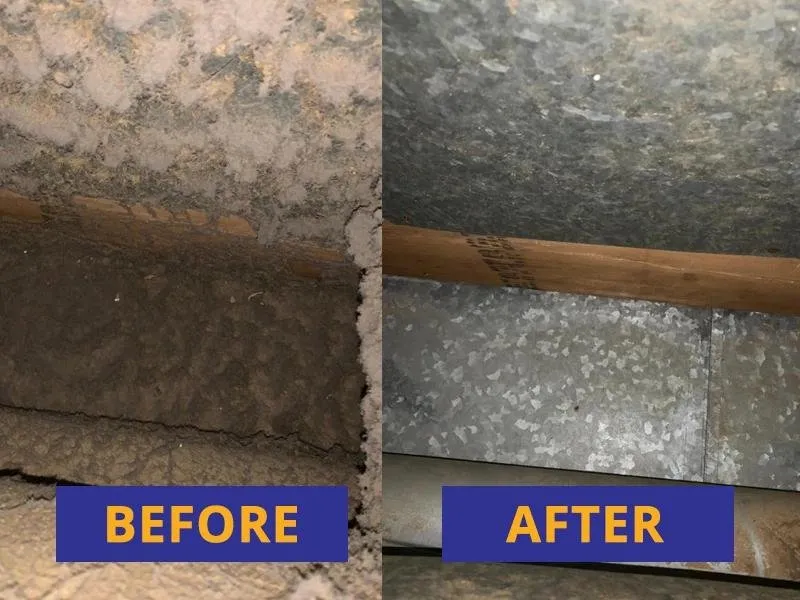
What a professional cleaning covers: Our air duct cleaning cleans the supply and return ducts and the registers, using rotating brushes and a HEPA-filtered vacuum. It's $199 to start, covering up to 10 vents, plus $29 per additional vent. When you count vents for an estimate, count only HVAC registers and return grilles, not the vents below. See our pricing page for every service in one place.
Bathroom exhaust fans
What they do: Bathroom fans pull humid air out of the room and send it outside, usually through a short duct to the roof, a wall or a soffit vent. The EPA's moisture guidance recommends using exhaust fans in bathrooms to help control humidity.
What you can do: Run the fan during showers and for a while afterward. Every few months, turn off power to the fan, remove the cover and wash it, and gently vacuum dust from the fan housing. Dust on a bathroom fan grille is common and a sign it's working, but heavy buildup reduces airflow.
What isn't part of a duct cleaning: Bathroom fans aren't connected to your HVAC ductwork, so they aren't part of an air duct cleaning. If a fan is loud, weak or not venting outdoors, an electrician or handyman is the right call.
Kitchen range hoods
What they do: A ducted range hood pulls cooking smoke, steam and grease out of the kitchen and sends it outside. Some hoods recirculate instead, filtering the air and blowing it back into the room.
What you can do: Use the hood every time you cook on the stovetop. The EPA recommends using exhaust fans when cooking to reduce indoor pollutants. Clean or replace the hood's filters on the manufacturer's schedule. Metal mesh filters can usually be washed. Charcoal filters in recirculating hoods are replaced.
What isn't part of a duct cleaning: Residential range hood ducts aren't part of the HVAC system or a dryer vent, and we don't clean them. Commercial kitchen exhaust is a specialized service handled by kitchen exhaust cleaning companies.
Dryer vents
What they do: A dryer vent carries hot, moist, lint-filled air from the dryer to the outside. The Building America Solution Center notes that a typical load sends about a gallon of water out through the vent.
What you can do: The U.S. Fire Administration recommends cleaning the lint screen before or after every load, cleaning behind the dryer, making sure the vent isn't crushed and checking that the outside flap opens when the dryer runs.
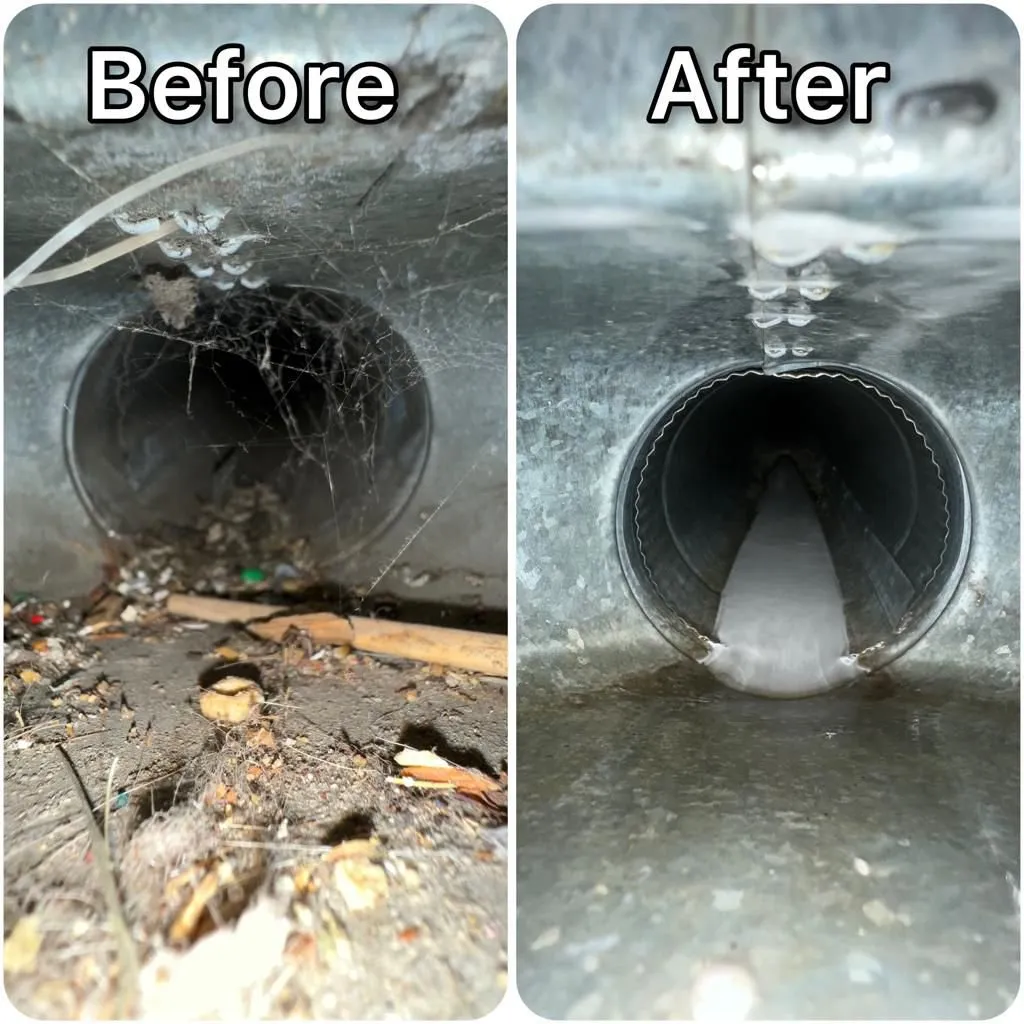
What a professional cleaning covers: Our dryer vent cleaning is $99 to start, covering up to 10 feet of vent, plus $15 per additional foot. The inspection is included, we clean through to the exterior hood and we check the outside flap. Of all the non-HVAC vents in your home, this is the one where buildup is a recognized fire hazard, and it's the one we clean.
One rule for all of them: vent outside
Bathroom fans, ducted range hoods and dryers all exist to get something out of the house: moisture, cooking fumes or lint and heat. That only works if they actually end outdoors. Building codes require dryers to exhaust directly outside, and the USFA specifically warns against venting into attics, soffits or crawl spaces.
If you're not sure where a vent ends, look in the attic or along the roofline for a terminal or hood. A fan or vent that dead-ends inside the house needs a contractor.
Quick reference
- HVAC registers and returns: air duct cleaning
- Dryer vent: dryer vent cleaning
- Bathroom fans: clean the cover and housing yourself, call an electrician or handyman for problems
- Range hood: clean or replace filters yourself, follow the manufacturer's guidance
Not sure if we cover your neighborhood? Check our service areas.
If you'd like the ducts or dryer vent checked, request a free estimate from Better Air Duct Cleaning Thornton.
Sources
- Should You Have the Air Ducts in Your Home Cleaned?, U.S. EPA, last updated February 19, 2026
- A Brief Guide to Mold, Moisture and Your Home, U.S. EPA, last updated February 18, 2026
- Clothes Dryer Fire Safety, U.S. Fire Administration, accessed October 22, 2026
- Clothes Dryer Fires in Residential Buildings (2008-2010), Topical Fire Report Series Vol. 13, Issue 7, U.S. Fire Administration, August 2012
- Proper Clothes Dryer Venting, Building America Solution Center (PNNL, U.S. DOE), last updated October 7, 2022